Trends, Tips, & Ideas For Your Next Big Event

Discover the latest wedding, corporate, and private party event trends, and find inspiration.

Thank you! Your submission has been received!
Oops! Something went wrong while submitting the form.
Choosing a wedding venue - what questions should you ask?
August 3, 2018
Wedding
2 read

Choosing a wedding venue - what questions should you ask?

arrow to the right icon

When planning your wedding it’s hard to overstate the importance of getting the choice of venue right. It has a bearing on almost every aspect of your big day so you need to think long and hard about it. Getting married is such an emotional event that it’s easy to overlook vital practical details when you are visiting possible locations. In this post we give you a list of crucial things you need to know before you finally make up your mind – it’s not exhaustive, but it’s a good start!

Photo by Photos by Lanty on Unsplash
Photo by Photos by Lanty on Unsplash


When planning your wedding it’s hard to overstate the importance of getting the choice of venue right.  It has a bearing on almost every aspect of your big day so you need to think long and hard about it.  Getting married is such an emotional event that it’s easy to overlook vital practical details when you are visiting possible locations.  In this post we give you a list of crucial things you need to know before you finally make up your mind – it’s not exhaustive, but it’s a good start!

Availability

Don’t waste time on any other details until you know whether the venue is available for the date you want.  Venues get very booked up at weekends and over the summer so you probably need to be looking and booking at least a year in advance for the most popular days.

On the other hand, if a specific date is not important to you and budget is a top consideration, see if the venue has some dates they are willing to discount.  At Clevedon Hall we occasionally have dates available over the next six months at a reduced rate.  Check here to see what we have available.

Capacity

You probably have a rough idea of how many guests will be attending during the day and evening.  Just make sure the venue can comfortably cope with this number.  At Clevedon Hall we can seat 150 in the library for dining on straight tables, or 124 on round tables with straight or round top table.  An additional 30 guests can sit in the adjoining orangery. We can have up to 250 guests for the evening celebrations.
Photo by Thomas AE on Unsplash
Photo by Thomas AE on Unsplash

Is the venue licensed for civil ceremonies?

If you want to have your ceremony and reception all under one roof, make sure your chosen venue has a wedding licence.  Otherwise you’ll have to organise the ceremony somewhere else and then host your reception at the venue.  Clevedon Hall is licenced to hold weddings indoors and also has a beautiful gazebo in the gardens that is also licenced – so you have a variety of options.

Exclusivity

If total privacy and exclusivity are what you want then make sure this is what you are going to get.  Some wedding venues hold more than one ceremony or reception a day.  If you decide to use a hotel venue, or some other kind of venue that’s open to members, guests or visitors it’s essential you clarify what areas, indoors and out, are included in the arrangement.  If you are sharing the venue with others make sure you know what restrictions apply – do you have finish by a certain time and are there issues with when suppliers can come and go?

Clevedon Hall is truly exclusive, giving you the run of the beautiful house and extensive grounds.  What’s more, the whole team is dedicated to looking after you and your guests without any distractions.  You can even book the venue for three whole days over a weekend (Friday morning to Sunday afternoon).

Is there ample parking?

Nearly everyone will probably be arriving by car, and some may have come from afar – the last thing they need after their journey is a problem with parking.  Make sure the venue provides ample free spaces and if they don’t you need to check other spaces are available at reasonable cost nearby.  There’s nothing worse than guests who arrive grumpy and late because they had to drive round looking for a suitable space then had a long walk in all their smart clothes and heels.

This is not a problem if you book Clevedon Hall.  There is ample parking on the estate, right next to the house.

Photo by Kelly Jean on Unsplash
Photo by Kelly Jean on Unsplash


Dining

The food is a hugely important part of the proceedings so you need to be clear how the venue handles things.  An in-house catering team certainly makes things easier, but you need to check how capable and flexible they are, otherwise you might not be able to get exactly the cuisine you want.  Also, are they able to handle different dietary requirements?

If, on the other hand, you decide on outside caterers make sure the venue is happy with that, whether there’s an extra charge for using their facilities and also that they have all the equipment that’s required.

If you plan on an early afternoon wedding breakfast your guests will probably be peckish again by the evening.  Check whether evening canapés or a buffet dinner part of your package, or do you have to pay extra?  You may discover that the venue does not provide evening food at all!

At Clevedon Hall we have a chef who trained in a Michelin starred kitchen, ably supported by a dedicated in-house team.  You are spoilt for choice in terms of cuisine and dishes, including canapes, the menu for the wedding breakfast itself and your evening catering.  We have seasonal menus to guide you along the way, but though you don’t have to pick from these at all. We will have a meeting 6 months before the big day to discuss what you’d like and to create a bespoke meal that perfectly matches your tastes and requirements.  Tastings are not included as standard but can be added at a small additional cost which we would confirm after your catering meeting.

Drinks

Check how much wine is included as part of the arrangement.  You can often upgrade your wine choices for an additional cost. If you want to provide more alcohol for your guests, then you'll need to ask whether it has to be bought through the venue or whether you can bring your own in with or without a corkage fee.

At Clevedon Hall our packages include a reception drink, a half bottle of wine with the meal, sparkling wine for the toast and tea and coffee.  We also offer a corkage arrangement if that’s something that appeals to you.  We provide a bar and guests can pay by card or cash, no minimum charge. Guests can also charge drinks to their rooms if they wish.  You can also set up a pre-paid bar tab. Just let us know any restrictions you would like to place on this - for instance, wine, beer and cider only.

Photo by Yutacar on Unsplash
Photo by Yutacar on Unsplash


Accommodation

It is essential you ask what overnight accommodation is available, either in the venue itself or nearby.  Also be clear about whether you have to pay up-front for rooms or if guests pay individually.  Make sure you have the check-in and check-out times as your guests will want to know well in advance.

At Clevedon Hall we provide 25 stunning bedrooms.  All of our bedrooms are set up as doubles as standard.  However, a variety of them can be set up as twins and/or accommodate additional pull out beds or cots. We have 3 cots in total and 9 pull out beds.  We have four suites in total and we let the bride and groom choose their favourite as they are all uniquely decorated.  We also have a cottage in the grounds if you want to spend a few night here before your big day.

If you would like the charge for the bedrooms included in your package then guest would pay you directly. Any additional rooms we have not in your package can be booked through us. Access to the venue is from 11 am which includes the bridal suite and the downstairs event space. The normal check-in time for the remaining bedrooms is 3 pm. We can sometimes make check-in earlier if there is no event on the previous day.  Check-out is 10.30am.

Photo by Chansereypich Seng on Unsplash
Photo by Chansereypich Seng on Unsplash


Suppliers

Some venues will supply you with a list of recommended suppliers who they regularly work with and trust, and it can be helpful if you're not sure where to start with your search for a wedding photographer or cake supplier.  However, some venues request that you stick to their recommended suppliers, which can limit your choices for your big day and potentially not work with your budget.

At Clevedon Hall we do have a list but (with the exception of catering and fireworks) you are welcome to choose other suppliers except for fireworks and catering.  Any suppliers not on our recommended list must have public liability insurance and any electrical equipment they use must be safety tested. We also ask that you check with us if your suppliers offer food or drink related services.

Last but not least

There are lots of other questions it is important to ask but this article covers the main issues.  Here are some other thing you should probably consider:

·         What are the restrictions regarding music, DJs and bands?

·         Are there any restrictions regarding décor?

·         How child friendly is the venue, what is disabled access like and what about pets?

·         What are the payment arrangements?

·         What’s the cancellation policy?

·         Are there any additional charges (for clearing up afterwards, for instance) that we need to be aware of?

·         Is breakfast included in the accommodation fee?

·         Can we get married outside?

·         Can we stay the night before?

Space does not permit us to answer these questions at length but contact our team any they will be happy to talk through these and any other things you want clarification on.


Wedding planning - guide for grooms
July 3, 2018
Wedding
2 read

Wedding planning - guide for grooms

arrow to the right icon

One thing is true of absolutely every wedding – ever. It takes two of you! And that’s an issue when it comes to planning the big day. Traditionally it’s the bride who tends to take the lead…but times are changing. These days the groom may want, or be expected, to get more involved. In this post we share some advice for brides, and grooms, that will hopefully come in handy as you work out who does what.

Photo by Felix Russell-Saw on Unsplash
Photo by Felix Russell-Saw on Unsplash


One thing is true of absolutely every wedding – ever.  It takes two of you!  And that’s an issue when it comes to planning the big day.  Traditionally it’s the bride who tends to take the lead…but times are changing.  These days the groom may want, or be expected, to get more involved.  In this post we share some advice for brides, and grooms, that will hopefully come in handy as you work out who does what.

Strike a balance

It’s important, right from the start, to work out between you the groom’s involvement in the decision making.  The three biggest issues that need to be properly discussed are the guest list, the date and the venue – these are definitely joint decisions. Smaller things, like choosing the wines, deciding on a photographer or picking the band, will probably be areas where he wants to be involved.  However, there are others, like deciding on table linens, talking to florists and designing the invitations where it’s likely he’ll more than happy to leave the details to the bride.  

The key thing is to be sensitive.  Don’t overwhelm your partner with too much information if they are reluctant to engage with certain aspects of the planning.  By the same token if he is showing interest welcome his input and make sure his opinion is valued.  If you ask for his thoughts and continually shoot his ideas down in flames, he will soon lose interest in contributing to the planning process. Make sure you encourage his ideas and find ways that they can be included in your wedding.  Play to his strengths.  If your husband to be is business-minded then he might be the best one to handle negotiations with suppliers.  If he is into music, then let him choose the band or DJ.  If he’s creative, then encourage him to come up with ideas for styling and decorations.  If he’s a big foodie, you might want to let him take the lead with this aspect of things.

Photo by Han-Hsing Tu on Unsplash
Photo by Han-Hsing Tu on Unsplash


Where grooms need to take the lead

There are some things the groom should take responsibility for.  Picking the best man and ushers is certainly his department.  The best man’s duties are quite important so the groom is well advised to choose someone sensible, reliable and well organised.  Some grooms also buy a gift for the best man so this needs sorting.

Deciding what to wear is another decision for the groom, but this does need to be discussed with the bride well in advance.  This is particularly important for any areas where colour is involved, such as the choice of a bright tie or waistcoat – it’s important to make sure it fits with the overall design scheme of the wedding.

A groom who leaves most of the planning and organising to his partner can help by realising that she is probably on wedding overload.  He can help by cooking her dinner, doing the dishes, renting her favourite movie and reminding her why the wedding planning is worth all the stress!

Some grooms also buy a gift for the bride to open on the morning of the wedding. This is a sweet idea but it’s not advisable to buy her an item of jewellery to wear on the day as she will already have made this choice and you are just putting her in an awkward spot!  Flowers, or a romantic note to read while she’s getting ready, will definitely be appreciated.  Another lovely touch is for the groom to take a moment with the videographer at the reception and record a special message for his new wife.

One thing for grooms to bear in mind is that this is going to be a day of photographs – a lot of them!  So it’s not a bad idea to make the effort in the months leading up to the wedding to get in shape, and stay in shape.  Then there’s the first dance.  This is seldom the part of the proceedings men most look forward to – but with a bit of preparation it can be fun.  The smart thing to do is approach it positively, take lessons with your fiancée and ENJOY it!

As the big day approaches there are lots of little things the groom can help with.   Ensuring name cards and decorations get to the venue, picking up last minute items that have been hired and sorting out any issues that pop up unexpectedly.

The groom’s speech

Only the groom can do this and it’s important to get it right.  The speech doesn’t have to be hilariously funny, but it does have to tick a few crucial boxes.  The most important thing with the speech is to formally thank all those who have played a part in making the day so special - the bridesmaids, the ushers, the best man, the maid of honour, both sets of parents for their support and the guests for sharing the day with you.  If some people have travelled from a long distance, the groom should single them out and thank them.  Finally he must not, on any account, forget to say how beautiful the bride looks!

Photo by Kane Reinholdtsen on Unsplash
Photo by Kane Reinholdtsen on Unsplash


To lighten it up a bit, and make it more personal, the groom can include some stories about how he and the bride met as well as some of the events leading up to this great day.  A word of warning, however – it’s not big, clever or funny to tell anecdotes he finds hilarious but which may embarrass the bride or make others feel uncomfortable.

As there’s quite a lot for the speech to cover, and all eyes are on the groom, he should prepare properly.  The speech should be finalised at least a week ahead of the big day and the groom should practice delivering it more than just once!

The honeymoon

Traditionally this is the groom’s responsibility and in the past the destination, and the details, often came as a surprise to the bride.  These days it’s more likely to be something a couple will want to discuss and plan together.  However, if the groom decides he’s going to sort it he needs to use his common sense and arrange something his wife will love – if she can’t live without her hair straighteners and is expecting something chilled and romantic by the sea she won’t be thrilled to find herself camping in the Serengeti or on a mountain biking tour of central Italy!

If the bride says “surprise me” and the groom is worried about getting it wrong he can ask her to draw up a list of 10 ‘dream’ and 10 ‘nightmare’ destinations to get a better idea of what kind of things she’d prefer.

Whoever is taking charge here it’s important to book early – leaving it late can increase the cost and there’s more risk of being disappointed.  Another smart tip is to include the honeymoon in the overall wedding budget and pick an option where it’s easy to control the cost.  All-inclusive resorts are a great option and many offer airport transfers, water sports equipment and various activities.

Photo by Wes Hicks on Unsplash
Photo by Wes Hicks on Unsplash


Another thing to bear in mind is seasonality.  A beach holiday won’t be fun if the weather is cold and wet.  Don’t forget to factor in flights and jetlag too - if you’ve only got a week Australia and Asia aren’t ideal.  Finally, make sure the hotel is aware you’re on honeymoon as they’re sure to make the experience extra special.  But one thing the groom must do is arrange some special touches to wow his new wife – whether it’s a private candlelit dinner or a bubble bath with petals and champagne he must show his romantic side.  

We're here to help if you need it

Even if you're working well together to get things sorted for your big day it's useful to have an experienced person to turn to for advice and suggestions.  The team here at Clevedon Hall have organised countless wonderful weddings - so if you've got any questions don't hesitate to ask us.  

The maid of honour - what you need to know
July 2, 2018
Wedding
2 read

The maid of honour - what you need to know

arrow to the right icon

Organising a wedding is more demanding than you might first imagine – so it’s vital that you share the tasks out amongst a team of helpers. The maid of honour is the most important of these. She is usually a sister or a close friend, sometimes she is referred to as ‘chief bridesmaid’ or as the ‘matron of honour’, if she is already married. Once you’ve decided on your bridesmaids the maid of honour’s job is start helping with some of the planning duties.

Photo by Zoriana Stakhniv on Unsplash
Photo by Zoriana Stakhniv on Unsplash


Organising a wedding is more demanding than you might first imagine – so it’s vital that you share the tasks out amongst a team of helpers.  The maid of honour is the most important of these.  She is usually a sister or a close friend, sometimes she is referred to as ‘chief bridesmaid’ or as the ‘matron of honour’, if she is already married.  Once you’ve decided on your bridesmaids the maid of honour’s job is start helping with some of the planning duties.

Dresses

You might ask the maid of honour to come wedding dress shopping with you and will probably want input when choosing the bridesmaid dresses.

This includes helping round up the bridesmaids for the dress shopping and fitting sessions.  She needs to plan the itinerary as appropriate, including sorting a fun place for lunch and booking appointments at the relevant shops.

As the bride, you are traditionally expected to pay for the bridesmaid dresses – but not always.  If you want a contribution from the maid of honour make sure this is discussed at an early stage to avoid any awkward misunderstandings.  The same goes for accessories, professional hair and makeup for the bridesmaids.

Photo by Photos by Lanty on Unsplash
Photo by Photos by Lanty on Unsplash


A second opinion

The maid of honour will almost certainly be called upon to discuss all your various ideas.  They should be prepared to consult on everything from wedding colour schemes to the shape of the wedding cake.   When things get a bit stressful the maid of honour needs to stay calm and supportive – to be the voice of reason when you lose it and emotions are running high!

Spare pair of hands

The maid of honour can also help you with more hands-on wedding tasks, such as writing or addressing wedding invitations, helping with the decorations or assembling homemade favours.   Secretarial duties probably include keeping a record of the RSVP so it’s clear who has confirmed and who still needs chasing up.  These may not be the most exciting tasks but the maid of honour needs to offer graceful help and a ready smile if called upon!

Photo by Photos by Lanty on Unsplash
Photo by Photos by Lanty on Unsplash


The hen party

This is the maid of honour’s moment to shine.  It’s a big job that requires a lot of thought and organising.  You will decide who attends but the maid of honour should consult the bridesmaids when it comes to ideas on where to go and what to do (much of it should come as a fun surprise for you).  Our recent posts on ideas for hen party destinations and hen party activities provide lots of inspiration.

You might decide that two parties are required - a wild hen party for the girls and a more grown-up and formal bridal shower style celebration that your mum and older relatives can attend.  The hen party should take place up to three months before the wedding – far enough in advance for everyone to recover!

Nearer the time

In the weeks running up to the big day the maid of honour should make sure the bridesmaids know what time they need to arrive, where everyone is getting ready and if there’s anything they need to bring.  They need to plan for every eventuality – organising lots of umbrellas in case it rains, and perhaps preparing a bridal emergency kit (could include everything from tissues to paracetamol and safety pins to lip gloss).

The day before the wedding

The maid of honour should make themselves available to run any last-minute errands for you, such as getting any hired items that need collecting.  They might also be required to help set up the reception room the night before or to come with you for any final beauty appointments, such as a manicure and pedicure.

Photo by Aegean Wedding Photography on Unsplash
Photo by Aegean Wedding Photography on Unsplash


The big day itself – the preparations

The maid of honour is going to be kept very busy and needs to be on top form.  One important task is to make sure the flowers are delivered exactly as arranged then distribute the bouquets.  A small but important job, and one that it’s easy to overlook, is sitting you down for a healthy breakfast – a bride needs more than coffee to get her through the early part of the day!

Another vital role is in assisting you as you get ready.  You’ll probably need help with your hair, makeup and getting into the wedding dress (as well as regularly telling you how gorgeous you look!).

The ceremony

The maid of honour, bridesmaids and your mum traditionally travel to the ceremony together and set off ten minutes before you so they’re there to see you arrive.  The maid of honour will also make sure you look picture-perfect by helping to arrange your hair and veil just before the walk down the aisle.  

During the wedding ceremony the maid of honour holds the bride’s bouquet.  You may also ask them to give a reading or to be a witness at the signing of the register. After the ceremony bride and groom leave first, followed the maid of honour and best man.

The celebration

If there is a receiving line at the reception the maid of honour will stand by you and your husband to greet the guests as they arrive for the wedding breakfast.  She will also take any presents to the gift table and put them on display.

The maid of honour is traditionally seated on the top table along with the happy couple, their parents and the best man.   However, this is not always the case today – the maid of honour may host a table of her own.

When you need to go to the bathroom the maid of honour is there to offer a helping hand – it can be a bit tricky in a wedding dress!  She’s also on make-up duty, checking any smudges are expertly rectified.  Later in the proceedings she is also expected to share a dance with the best man.  You and hubby take the first dance but they then take the next one and encourage everyone to join them.

Photo by Ben Rosett on Unsplash
Photo by Ben Rosett on Unsplash


After the wedding

If you and your husband head straight off on honeymoon the maid of honour will probably be responsible for returning any hired clothes or accessories as well as being asked to store your dress until you return.  She might also be asked to assist with removing any decorations from the venue and tidying up any other organisational loose ends.

Our team are here when you need us

Asking someone to be your maid of honour is no small thing – they are taking on a big and difficult job.  However, if you book a dedicated wedding venue like Clevedon Hall our expert team of wedding specialist will be there for her, and you.  Whether the two of you want advice, ideas or recommendations we’re only too happy to help in any way we can

Best man - what is he supposed to do?
June 2, 2018
Wedding
2 read

Best man - what is he supposed to do?

arrow to the right icon


Photo by Kats Weil on Unsplash
Photo by Kats Weil on Unsplash


Your big day is all about you and your husband to be.  But it’s also very much a team effort, with different people taking care of numerous tasks both before and during the event itself.  Early on your fiancée will need to pick a best man and get him helping out with the planning and preparations.  In this article we set out the best man’s main responsibilities – so you and they know what is expected of them.

He is the groom's right-hand man, organising, advising and sorting a whole list of things large and small, before and during the proceedings.  The good news, from the best man’s point of view, is that you, assisted by your maid of honour, do most of the planning.  The bad news is that still leaves quite a lot for him to take care of.  Ideally you want someone who is organised and reliable rather than one who just excels at being the life and soul of the party – his main job is not to drink more than everyone else!

Communication

The best man needs to make sure that everyone within the groom’s party knows what’s happening and to inform them of any changes to the plan.  It’s probably a smart move to set up a Facebook or WhatsApp group that everyone can access easily.

Dress code

It’s the best man’s responsibility to make sure all groomsmen are properly suited and booted.  This includes organising any suit fittings that are required, as well as making sure the finances are in place before the shopping process starts.

Photo by Filippo Andolfatto on Unsplash
Photo by Filippo Andolfatto on Unsplash

Gifts

One of the best man’s tasks is the choosing and sourcing of the gifts for the groomsmen – it’s only right to thank them for their efforts and to give them each a memento.  Popular gifts include whisky flasks, pocket watches or cufflinks and these can be personally engraved with an appropriate message.

The stag party

Although the party itself is a lot of laughs the job of organising it can be a real headache – and this is definitely where the best man really shows what he’s made of.  The challenge is to come up with a suitably inspiring itinerary, sort transport and possibly accommodation, get payment from everybody while their still sober and get creative with ideas for a theme, games, pranks and “entertainment”.  It’s also the best man’s responsibility to ensure the groom survives the experience all in one piece (without shaved head, eyebrows removed or any other body parts missing – watch ‘The Hangover’ if you need to check out all the things that could go wrong).

On the day  

The best man, along with the maid of honour, is responsible for ensuring everything goes to plan and runs smoothly.  He needs to be cool, calm and collected, so hitting the alcohol early in the day is not recommended!

His first job is to make sure everything is set up correctly.  This may involve picking up last minute items and organising stuff at the venue.  A crucial part of this role is making sure the rings are kept safe.  But that’s not all – he needs to make sure the wedding license is brought along and that the groom arrives at least twenty minutes before the ceremony is set to begin.

At the close of the ceremony the best man traditionally guides the maid of honour back up the aisle whilst following the bride and groom.   Then, once the ceremony is over, the best man should greet guests upon arrival at the reception.  During the meal he should introduce each of the speeches and then deliver his own.  If you'd like to give him some tips on preparing and delivering his speech this article should help.

Photo by Alasdair Elmes on Unsplash
Photo by Alasdair Elmes on Unsplash

At the end of the day the best man is also responsible for looking after any gifts or envelopes.  This is an especially important task if you are your husband are leaving for the honeymoon straight from the celebrations.  A final fun task for him is to decorate your car so everyone knows you are “Just Married”!

Our team supports your team

So, being nominated best man is not just an honour – it’s a serious responsibility.  Having said that, if you book a venue like Clevedon Hall our dedicated team of wedding experts will be there to offer all the help and support that may be needed.  You and the best man, or anyone else involved in the planning or celebration, can turn to us for advice and assistance at any time – we’ll do everything we can to create an occasion everyone will enjoy and fondly remember for the rest of their lives.

Where the hottest hen parties are happening
June 1, 2018
Venue
2 read

Where the hottest hen parties are happening

arrow to the right icon

Even if you are leaving the organisation of the hen party to your Maid of Honour you’ll probably want to have some say in where the fun and games are going to happen. In this post we provide you with so destination inspiration - Bristol is a popular party pick but you might want to go further afield and be a little more adventurous!

kyle-loftus-665676-unsplash (1).jpg

Photo by Kyle Loftus on Unsplash


Even if you are leaving the organisation of the hen party to your Maid of Honour you’ll probably want to have some say in where the fun and games are going to happen.  In this post we provide you with so destination inspiration - Bristol is a popular party pick but you might want to go further afield and be a little more adventurous!

Photo by Kelsey Chance on Unsplash
Photo by Kelsey Chance on Unsplash


Brighton

This seaside city is hen party heaven, offering something for everyone.  During the day you have the beach and lots of wonderful boutiques for a bit of retail therapy.  If you like a little sophistication then there’s posh afternoon teas and spa pampering aplenty.  But if a bit of cheekiness floats your boat then Brighton has more than its fair share of male strippers, nude life drawing classes and butlers in the buff to keep you amused.  Plus there’s some of the best nightlife and clubbing action in the whole country.

Photo by Sabri Tuzcu on Unsplash
Photo by Sabri Tuzcu on Unsplash


Amsterdam

The canals, the cobbled streets, architecture, the cyclists, the tulips – Amsterdam will initially strike you as reserved, traditional and laid back.  But don’t be fooled.  This city is as hedonistic as it is as chilled-out, as weird and wonderful as it is picturesque and quaint and as unashamedly illicit as it is innocent.  This fusion of the comfortable and expected with the edgy and surprising makes Amsterdam a wonderful hen party venue – there’s never a dull moment!  Just bring a sense of fun, bags of energy and a broad mind!

Photo by Annie Gray on Unsplash
Photo by Annie Gray on Unsplash


Barcelona

The Spanish have a wonderfully laid-back attitude to life and nowhere is this more apparent than in Barcelona – the city is party central, famed for its culture, food and dedication to having a good time!  Like Brighton it’s on the seaside, but we’re talking the Mediterranean, not the English Channel.  The beach is only a short stroll from the city centre, offering acres of golden sand, pristine blue waters and lovely warm weather most of the year round.  Culture vultures will love exploring the architectural gems of Antoni Gaudi, the Picasso Museum, the Fundació Joan Miró gallery and the maze of twisting alleyways in the old city.  But perhaps the biggest attraction is the sheer range of wonderful eating, drinking and clubbing experiences – nowhere offers a better choice tapas bars, cocktail lounges, amazing restaurants, traditional bodegas and night clubs.

Photo by Matty Adame on Unsplash
Photo by Matty Adame on Unsplash


Ibiza

Holding your hen party here might seem a little unoriginal – but it’s popular for good reason.  This stunning Balearic island has been hosting hedonistic hen weekends and debauched party events of all shapes and sizes for decades and it’s pretty much safe to say that they’ve perfected the art.  Gorgeous beaches, amazing sunsets and legendary clubbing – Ibiza is every bit as sexy and wild as its reputation.  You won’t be disappointed!

Photo by Yutacar on Unsplash
Photo by Yutacar on Unsplash


Berlin

This might seem an odd choice – but you’ll discover it’s an inspired one.  On the one hand it’s steeped in history, with the Brandenburg Gate, Checkpoint Charlie and the Berlin Wall sure to amaze you.  On the other it is a city reborn, buzzing with life, totally hip and unbelievably cool.  It has a vibrant underground music scene, the streets are alive with upmarket cocktail bars and excellent restaurants plus there’s no shortage of traditional pubs.  The clubbing scene is well known to be amongst the best in Europe, if not the world, and parties run non-stop from Friday night to Monday morning.  Berlin is a head-spinning melting pot of old and new, east and west, conventional and eccentric.  Shaking off it’s not-so-happy past, this is a city that has certainly rediscovered how to party!

Photo by Caitlyn Wilson on Unsplash
Photo by Caitlyn Wilson on Unsplash


Budapest

The capital of Hungary, straddling the mighty Danube, makes a great hen destination.  You’ll get a real flavour of eastern Europe spiced with the romance and decadence of the Hapsburg Empire plus the irrepressible buzz and excitement of a city rediscovering its sense of fun after the collapse of communism.  The spas and thermal baths have been attracting visitors since Roman times so there’s ample relaxation and pampering by day.  But at night the streets come alive with thousands of wonderful little cafe bars, cocktail bars and wild clubs that will keep you up on your hen night until it's light.  One of the unique attractions are the legendary “ruin bars”.  These are slightly chaotic and down-at-heel drinking holes that have sprung up in derelict buildings and unused outdoor spaces (we’re talking old car parks and ramshackle rooftops) – with cheap drinks, crazy décor, mad goings-on there’s nowhere better than a ruin bar for getting wrecked!

liam-mckay-674319-unsplash.jpg


Flying from Bristol

All of these hen party destinations are a short and cheap flight from Bristol airport so getting there and back couldn’t be easier or more affordable.  However, these are not the only options.  If you had an amazing Hen Party somewhere we’ve not covered then just let us know and we can feature it in future posts.  The team at Clevedon Hall is constantly gathering and sharing information on all things wedding-related so if you have any questions, or would like some advice, don’t hesitate to get in touch.

How to give a great best man's speech
April 29, 2018
Wedding
2 read

How to give a great best man's speech

arrow to the right icon

The hot wedding of the moment (as far as the media is concerned) is obviously Harry & Meghan’s. And Prince William has just been named as Best Man. As second in line to the throne public speaking is something that he’s fairly familiar with – so the speech should be something he takes easily in his stride. For your wedding, however, the best man may need a little help when it comes to this aspect of the proceedings. In this post we offer some advice that he may find helpful.

photo-1521321335080-61c4776db11b.jpg


The hot wedding of the moment (as far as the media is concerned) is obviously Harry & Meghan’s.  And Prince William has just been named as Best Man.  As second in line to the throne public speaking is something that he’s fairly familiar with – so the speech should be something he takes easily in his stride.  For your wedding, however, the best man may need a little help when it comes to this aspect of the proceedings.  In this post we offer some advice that he may find helpful.


Top speech-making tips if you have been chosen as the best man

·         Plan well in advance – that means at least two months before the big day.  You are going to be busy as the date approaches so get the speech preparation started early.

·         Start with a great one-liner or joke to get everyone’s attention and set the tone

·         Joke about the groom, not the bride.

·         Practice – a lot.  Do it at least three times, out loud, to an audience.  Also video it and play it back to get a feel for how it’s working (or not!)

·         Write it down.  You may have a great memory but nerves can mess it up.  Use small note cards rather than a sheet of paper – these ae easier to handle.

·         Vary the pace – use pauses for dramatic effect.  Also vary the tone, from humorous to heartfelt – it’s good to strike different emotional chords.

·         Speak clearly and confidently – it’s no good if people are struggling to hear the words

·         Don’t get drunk.  A glass or two is fine to help ease the nerves, but anything more and your judgment may be impaired.  You need to have your wits about you - in every sense!

·         Don’t panic.  If the speeches that immediately precede yours have gone down well it can be hard to resist that sinking “how do I follow that?” feeling.   The thing to remember is that just because someone else has been funny it doesn’t mean you won’t be too.

chuttersnap-461238-unsplash.jpg


Have a clear structure

  • Opening – you need a killer line that grabs attention and gets a laugh
  • Introduce yourself.  You’ll be an unknown entity to many, so set up briefly who you are and why you’re such good friends with the groom.
  • Thank the other speakers and congratulate the wedding couple
  • Compliment to the bride.  It’s a good idea to say something early on about how beautiful she looks and what a brilliant woman she is in general. This will set her, her parents and friends at ease.
  • Make some jokes about the groom and tell some stories from his past (more on this below)
  • Read messages from guests who couldn't make it, if there are any
  • Propose a toast

Keep it brief

You need to give you enough time to say something meaningful but without things starting to drag.   Around 10 minutes is probably about right – but if you are an accomplished speaker capable of holding people’s attention, you can probably stretch it a bit beyond this.

“No-go” areas

There are a few topics you really shouldn’t touch on.  You may think it’ll get a laugh, but the chances are that others will be offended.  So, for your sake and theirs, don’t go there.   It is therefore best to avoid:

  • Negativity about marriage in general
  • Ex-girlfriends or boyfriends
  • Previous marriages/divorces
  • Drinks, drugs, gambling, race, politics or other subjects that might give offence
  • Adult humour or any other mention of sex
photo-1439539698758-ba2680ecadb9.jpg


What kind of stories can you tell?

Stories about the groom provide the highlights of the speech.  It’s Ok to embarrass him a bit…but you need to use your judgement and avoid going too far.  This will partly dependant on the personality of the groom – is he serious and shy or is he humorous and outgoing?   Every groom has some characteristic, or story from their past, that you can use.  However, obscure stories or inside jokes are best avoided, because only a few members of the audience are likely to find them funny.

You’re painting a picture of the groom and, to some extent, your relationship with him.  You need to remember, however, it’s all about him, not you.   While you want to raise some laughs you also want to help everyone (those that already know him, and those that don’t) what a great and talented guy he is.

It’s alright to get a little bit philosophical - say something about love in general while also emphasising the personal love story of the bride and groom. Seal your speech by saying what a wonderful match they are and how happy you know they’ll be as they embark on married life together.

We’re here to help

If your best man is struggling to prepare for his speech we hope these tips prove of helpful.  If there’s any other aspect of your wedding planning we can assist you with just get in touch with our expert team – they’ll only be too happy to share their experience and knowledge with you.

Weddings and social media - a marriage made in heaven?
April 28, 2018
Wedding
2 read

Weddings and social media - a marriage made in heaven?

arrow to the right icon

If you want to share the love, excitement and fun of your wedding far and wide then social media is a blessing. You may, however, worry that everyone will be so busy with their phones that it will take over your big day. Whatever your attitude there are some things you need to consider well ahead of time.

photo-1518757535402-49f315ea55f6.jpg


If you want to share the love, excitement and fun of your wedding far and wide then social media is a blessing.  You may, however, worry that everyone will be so busy with their phones that it will take over your big day.  Whatever your attitude there are some things you need to consider well ahead of time.

Online or unplugged – it’s your choice

Do you want to go wild on social media, sharing everything from the engagement party to your honeymoon, and giving all your family and friends full licence to do the same?  Or do you want to restrict the use of any device that takes photos or records videos (and relying on the official photographer and videographer to capture the memories)?  Then again, you might want to steer a middle way – unplugging the wedding ceremony but letting everyone loose to record and share the reception, for instance?

Whatever you decide there are some important considerations to bear in mind.

If you decide to go unplugged

Most couples, it has to said, have a positive attitude to the sharing of their big day across the social media channels.  A recent survey by a US bridal magazine revealed that 11% of brides are opting for an unplugged wedding.  33% of those who responded want to keep the ceremony itself phone-free.  41% were pretty relaxed about social media and had no wish to restrict the way guests used their phones or posted stuff.

However, if you are one of those who do want to place a total or partial block on phone use and social media, then there are some things you need to consider.

Let people know in advance

Make your expectations clear well ahead of time.  Gently advise guests of your intentions in your invitation package or on your wedding website (if you have one).  This will ensure that they are not shocked to discover they are entering a smartphone-free zone!

How to handle it on the day

Even if you make your wishes clear well before the big day some people are sure to forget.   It’s a good idea have someone make a brief announcement on the day of your wedding to remind people not to use their smartphones during the ceremony and/or celebration (whatever you decide).  Also, if you feel it necessary, you could appoint a member of your wedding party to help encourage other guests (nicely, of course) to refrain if they are using their devices at times you have asked to be phone-free.

Don’t get bent out of shape

No matter how many times you ask, people will still forget, or be unable to resist taking a cheeky shot or two.  With that in mind, it helps to be realistic about an unplugged wedding and be relaxed about the fact that photos could still very well appear on social media networks or elsewhere.

Share your own photos after the wedding

After the big day make sure you share a few images of your wedding with your guests. You can include a photo on your thank you card or make the wedding photos available to guests online.

pexels-photo-786801.jpeg


If you decide to make it a social media free for all

Most couples are more than happy to embrace social media and let their guests record, post and tweet to their heart’s content.  If you are in this camp then here are some tips worth following.

Create a unique hashtag

To keep track of all the photos and posts created at and around your wedding you must establish a suitable hashtag.  It’s a good idea to include both your names, as this is relevant and easy for everyone to remember - something like #JohnandSarah Of course, remember to do some research beforehand to check that your chosen hashtag isn’t being used already.  If it is, you’ll need to add some other details, like #JohnBandSarahY, or add the date of the wedding (#JohnandSarah1-7-2018)

Make sure Wi-Fi is provided

Pick a venue with Wi-Fi and make it easy for everyone to access by notifying guests of the password.  Print the info on small cards and place these around the venue, or have a larger board encouraging people to share.

Appoint a ‘Tweeter of honour’

You want to be focusing on this most special day, and totally in the moment – not glued to your mobile phone.  Ask someone, well before the big day, to take over responsibility for updating your social media accounts, posting picture and doing any other urgent social media tasks.

Create a digital archive of your day

People are going to be posting and sharing their photos of your big day across a wide variety of social media platforms.  Keeping track of your favourite shots can be a nightmare.  However, there are some great tools and apps to help you – Wakelet, Scripin, GuestShots, Wedding party, Wedpics being just a few you might like to check out.  Once you’ve set up a page it will make it easier for everyone to share and reminisce before your official wedding photos are available.

apple-electronics-event-318540.jpg


Finally – some digital do’s and don’ts

  • DO create a private Pinterest board to help you plan your wedding (research suggests 70% of women start Pinterest wedding boards before getting engaged!)
  • DON’T send your invitations via email – hard to believe, but some older guests may still not be regulars online, spam filters may block your message, or busy people may just miss it in their inbox.
  • DO mark the ceremony or reception location on Google Maps for easy sharing
  • DON’T vent on social media about wedding plans or the wedding party
  • DO ask guests to use a special hashtag for wedding posts, tweets and pictures
  • DON’T spend your wedding day trying to master the perfect selfie
  • DO prepare your speech on a tablet or an iPhone
  • DON’T update your Facebook status at the altar

Clevedon Hall – we have the technology

If you want a wedding venue that makes it easy for you and your guests to share the big day on social media then Clevedon Hall certainly has everything you need.  Our commercial grade wi-fi network operates at 80Mbps and will support 600 users simultaneously, providing secure, seamless internet.  No matter how busily everyone is tweeting and posting you can be confident the system can more than cope.

Choosing the ring - a quick guide for the bride
April 13, 2018
Wedding
2 read

Choosing the ring - a quick guide for the bride

arrow to the right icon

Picking the ring, the one that is just right for you, is not quite so easy as you might first imagine. The sheer range of options is bewildering. What’s more, you’ll be wearing it for the rest of your life – so it has to be perfect. No pressure then! Having said that, if you follow the tips in this article you’ll find the process a lot easier…and much more fun.

Photo by Atul Vinayak on Unsplash
Photo by Atul Vinayak on Unsplash


Picking the ring, the one that is just right for you, is not quite so easy as you might first imagine.  The sheer range of options is bewildering.  What’s more, you’ll be wearing it for the rest of your life – so it has to be perfect.  No pressure then!  Having said that, if you follow the tips in this article you’ll find the process a lot easier…and much more fun.

Think two rings, not one

The fact you’ll have a wedding ring and an engagement ring immediately raises a few questions.  Some couples like to make buying the engagement ring a joint decision – in which case you can buy the engagement ring and wedding ring at the same time.  In some ways this makes finding a perfect matching pair a little easier.

However, in many instances, the ring is presented to the fiancé as a surprise.  If you find yourself in this situation, where your partner has already purchased the engagement ring, you’ll want to consider what kind of wedding ring will work best alongside it.  For example, if you have a very striking engagement ring, you may want a simple, no-fuss wedding band.   However, a simple engagement ring may call for the added sparkle of a diamond pavé band.  

Also think about how the rings will physically fit together on your finger. If you're planning on wearing your engagement and wedding ring side by side, every day, look for a contour or shadow band designed to interlock with the engagement ring.  If you're planning on wearing your wedding ring alone, you may want a more intricate style that will look great with or without your engagement ring.

Photo by Beatriz Pérez Moya on Unsplash
Photo by Beatriz Pérez Moya on Unsplash


Money, honey

Although this won’t sound very romantic…it’s wise to set a budget when choosing your ring.  As a simple rule you should probably think about spending something like three percent of your total wedding budget on the rings.   Adding diamonds, or engraving the band, will quickly add to the cost, so factor that in too.  The price of engraving is usually based on the number of characters, the font used and whether it's engraved by hand or machine (by hand is usually more expensive).

Narrow down the choice

The sheer range of options can be overwhelming…but don’t panic!   Take your time and just ask a few simple questions – by a process of elimination you’ll be able to narrow down the choice.  For example, do you want a simple ring or something more embellished – a classic plain band, a ring with a single diamond or something with multiple diamonds in a pave or channel setting, a design featuring some other gemstones, a patterned wedding ring, a shaped wedding ring?  What metal takes your fancy – gold, white gold, rose gold, silver, platinum, palladium, titanium and zirconium?  Then, as mentioned earlier, what is going to work best in terms of your engagement ring?

Don’t leave it until the last moment

Once you have a rough idea of what kind of ring you'd like it's time for the fun part: trying them on!  You should probably start your search about six months before the big day - at the very least give yourself a couple of months to shop around.  This is one decision you won’t want to rush – research online and allocate a couple of days for visiting physical jewellery stores.  Set your heart on a custom ring?  Then you'll probably need even more time.  Also remember that extras, like engraving, can take up to a month.

Photo by Wesley Tingey on Unsplash
Photo by Wesley Tingey on Unsplash


Size matters

You’ll probably wear your wedding ring 24/4, for months on end, through summer and winter, year after year.  And over that extended period your finger will change shape – if you exercise, when you get pregnant, should you put on weight, when your hands get hot and when they get cold.  You need to bear these factors in mind when deciding on the right ring size.  It’s good advice to schedule your final ring fitting at a time when you're calm and your body temperature is normal.  Don’t book that appointment for first thing in the morning (you retain water from the night before), right after you've exercised (fingers swell) or when you're extremely hot or cold (which can cause your hands to expand and shrink).  Of course, if your finger changes permanently over the years you can always have your wedding ring re-sized by a jeweller.

Lifestyle considerations

Following on from the previous point, your ring will become almost a part of you – so you want a design you’ll find easy to live with.  If you play a lot of sports, or a musical instrument, a slimmer ring with rounded edges may make the most sense.  If you are someone who works with her hands work you may want to choose a simple, solid metal ring - gemstones can come loose and carvings can trap dirt. If you're a super active kind of person you’d be well advised to go for platinum.  This metal is extra durable and when scratched the metal is merely displaced and doesn't actually wear away.

Photo by Rachael Crowe on Unsplash
Photo by Rachael Crowe on Unsplash


Keep an open mind

While it is important to narrow your focus a little before you start to browse in earnest you should still give yourself the opportunity to change your mind.  You might start out loving the idea of a braided rose gold ring or a diamond eternity band, but don’t rule out other ideas and styles that take your fancy.  Be open to suggestions made by the jeweller – they may come up with an inspired idea that you’d never have come up with on your own.

The last word

There are no hard and fast rules when choosing a wedding ring.  Hopefully you’ve found these hints and tips useful but ultimately it’s a matter of what you feel best suits your own unique sense of style.  Enjoy doing your research and have confidence in your own judgement!

Blooming wonderful - top floral tips for your big day
April 10, 2018
Wedding
2 read

Blooming wonderful - top floral tips for your big day

arrow to the right icon

There’s so much to think about when planning your wedding – but one thing you must not forget is the flowers! They play a surprisingly big part in setting the tone for the day, and can also take a big slice out of your budget, so they need careful consideration. However, if you don’t know your roses from your ranunculus or your peonies from your petunias, there’s no need to worry. With a little bit of professional help from a florist choosing the flowers can become one of the most exciting parts of wedding planning. In this post we share a few useful pointers to get you started.
Photo by Nick Karvounis on Unsplash


There’s so much to think about when planning your wedding – but one thing you must not forget is the flowers!  They play a surprisingly big part in setting the tone for the day, and can also take a big slice out of your budget, so they need careful consideration.  However, if you don’t know your roses from your ranunculus or your peonies from your petunias, there’s no need to worry.  With a little bit of professional help from a florist choosing the flowers can become one of the most exciting parts of wedding planning.   In this post we share a few useful pointers to get you started.
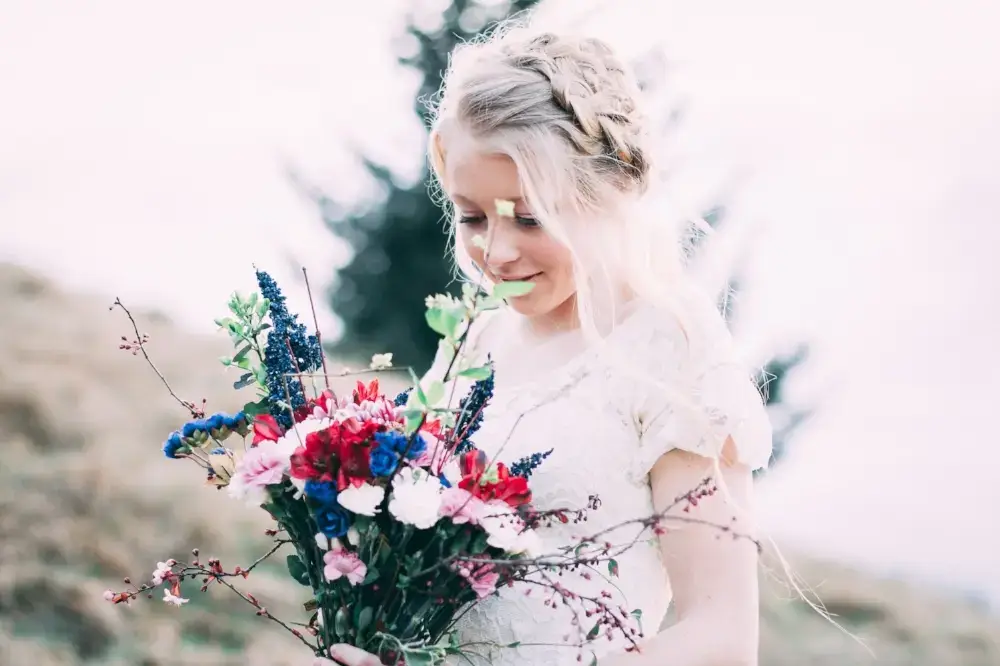
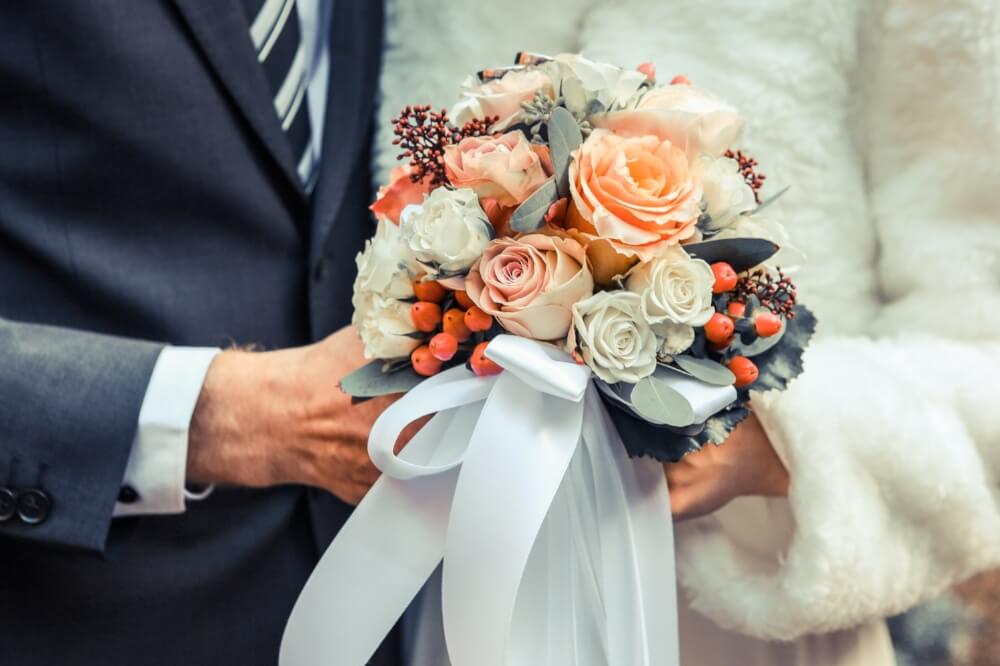
Decide on a budget for you blooms

This will give your florist a good idea of what’s possible – there’s no sense is discussing options that are going to be too much of a stretch.  As a rule of thumb you should probably allocate just under 10% of your total budget for the flowers.

Photo by chuttersnap on Unsplash


Draw up a list

You could keep it simple and just go for bouquets, buttonholes, and centrepieces.  The list of possibilities, however, is considerably longer.  You might want to include a floral crown for the bride, tossing petals for guests, lounge area arrangements and decorations for the powder room.  It’s smart to prioritise – draw up a “must have” list and “nice to have” list.  For example “flowers for the wedding party” may go on your “must have” list but “flowers for every table” might go on the “nice to have” list.  This will prove a huge help when you and your florist discuss the different options.

Choose flowers that suit your theme

The florist can advise here – because it’s easy to get it wrong.  For example, gerbera bouquets wouldn’t work with a vintage or “shabby chic” theme but are ideal for modern, contemporary weddings. Gypsophelia, peonies, David Austin roses and carnations are far more suited to vintage-style weddings.

Swot up on the symbolism

Certain flowers have special meanings that are useful to know.  Roses are not only lovely to look at, and have a wonderful aroma, but are also associated with love and passion – hence their popularity at weddings. Convallaria (Lily of the Valley) means purity and sweetness. Stephanotis means happiness in marriage. Sweet pea symbolises departure (a bride leaving one life behind to begin a new one with her husband).    Marigolds, on the other hand, mean cruelty, grief and jealousy – so they are best avoided!

Photo by Tamara Menzi on Unsplash


The big question of the bridal bouquet

The bridal bouquet is an essential accessory so it’s important that it compliments the dress…without overpowering it.   As a general rule the bigger the dress, the bigger the bouquet.  So, a simple and elegant column dress works well with a single stem of lily.  A full, detailed dress, on the other hand, suits a bigger bouquet with mixed flowers. As far as colour is concerned white flowers to match your dress, with contrasting green leaves can look stunning.  If your dress is off-white peach, orange and pinks can make a delightful contrast.  Don’t forget how the flowers will look in the photographs.  All-white or ivory bouquets are stunning, but without additional colours they won’t stand out boldly against a white or ivory wedding gown.

Think seasonal

It makes sense to pick flowers that are in season.  These are always the best value and will be the strongest and longest-lasting throughout your big day. Any flower grown out of season is either grown under glass or has travelled a great distance to get here, so expect to pay more.  Some flowers are readily available all year round, such as roses and tulips, so can be a good starting place budget-wise if you don't know exactly what you want. But remember that even tulips are best in the spring - when they're the highest quality. And do also remember that the flower seasons for cut flowers are about 2 months ahead of those in your garden.

There’s a lot to be said for silk

Artificial flowers are now so botanically correct that it’s hard to tell the difference from the real thing.  One big advantage is that you can buy them well in advance so there are no surprises on the day and they are also easy to transport.  One useful tip is to spray a small amount of the perfume you are wearing onto your silk flowers for a lovely scent.  Cost-wise they are only marginally cheaper than fresh but they can be kept indefinitely and make a marvellous memento.  If you want to free up budget to spend on other things you can even hire silk flowers for the day, or sell yours after the event.

Photo by Taylor Harding on Unsplash


Find the right florist

Do you want someone who will take the lead and give you a lot of ideas and advice?  Or do you have a pretty good idea of what you want and just need someone to deliver your vision?  Make sure you see their portfolio so you get a good idea if their taste and style matches your own.  Also talk to friends and relatives who have recently tied the knot to get their input and suggestions, not just on choice of florist but to gather any useful tips and hints they may have.

Pick our brains before you pick your flowers

The team at Clevedon Hall have a wealth of experience that covers every aspect of wedding planning – including all things floral.  Whether it’s drawing up a lit of recommended local florists or deciding how best to decorate our venue for the maximum wow factor, all you have to do is ask!

Six classic wedding mistakes and how to avoid them
April 3, 2018
Wedding
2 read

Six classic wedding mistakes and how to avoid them

arrow to the right icon

Your wedding is probably going to be the most memorable day of your life – so you obviously don’t want any little challenges, issues or regrets clouding your happy recollections. There’s a lot to be learnt from all those who have walked down the aisle before you and in this post, we look at some of the most common mistakes that people tend to make. If we draw your attention to them early then the chances are that you can avoid these unfortunate pitfalls!

Photo by freestocks.org on Unsplash
Photo by freestocks.org on Unsplash


Your wedding is probably going to be the most memorable day of your life – so you obviously don’t want any little challenges, issues or regrets clouding your happy recollections. There’s a lot to be learnt from all those who have walked down the aisle before you and in this post, we look at some of the most common mistakes that people tend to make. If we draw your attention to them early then the chances are that you can avoid these unfortunate pitfalls!

Not starting out with a clear budget in mind

Your wedding day is obviously about romance and celebration – but you need to be clear at the outset how much you can afford to spend. This may sound like we’re putting a damper on things right from the start. It’s far better, however, to have these discussions early on – before you get carried away with lots of ideas that you then realise you can’t afford. And you certainly don’t want to be approaching the big day with lots of money worries buzzing around your head. So crunch the numbers, then get creative as you think about all the ways you can make the money go further.

Photo by Thomas William on Unsplash
Photo by Thomas William on Unsplash


Failing to agree on the guest list before anything else

It’s so easy to get carried away discussing dates, researching venues, thinking about dresses and exploring theme options that you overlook what is arguably the most important decision of all (right up there with the budget – because the two go together). We’re talking about the wedding list. The number of people you plan to invite dictates practically everything else. Like setting the budget it’s not the most glamorous or exciting part of the process – but it’s something you need to sort right at the start. If you don’t…you’ll probably have cause to regret it. Cue the story about the couple who put down a non-refundable deposit on a cosy restaurant that could comfortably accommodate 75, only for mother-in-law-to-be coming up with a further 30 guests she insisted on inviting!
So, do not pass GO on the other discussions until you’ve got basic agreement on the scale of the event. Do you want an intimate affair, with close friends and family-only, or the bash of the season with 300-plus people, or somewhere in the middle?

Excluding your partner from important decisions

This follows on from the previous point – you need to discuss and agree on everything with your partner, and not take executive decisions in the heat of the moment, confident you can talk them around later. Having said that, make sure the wedding is not the only thing you ever talk about. Your fiancé will want to be involved in the planning process but try to avoid reading aloud every wedding magazine article you come across, taking him through thousands of images on Pinterest or overloading him with details, choices and ideas! Designate a night to sit down and talk about every different aspect of the wedding, and try to get a concrete idea of your partner's interest in the various details. If flowers aren't his thing then accept that and take the lead in this area. But also listen to things he is interested in and willing to help with.

Being hasty in your choice of venue

The venue sets the whole tone for your big day. You want one that won’t cramp your style. But by the same token make sure you don’t go too large and find yourselves rattling around. Clevedon Hall is grand and elegant enough to create a terrific sense of occasion. But it is also perfect for more intimate events with just a few close friends and family. The property offers a variety of rooms that can be combined in a number of different configurations to match your requirements perfectly. You also have the added opportunities afforded by the gardens and gazebo - a beautifully hand-crafted feature with seating for 150 guests on the surrounding terrace it makes a magical spot for your ceremony and photos.

Another terrific plus with Clevedon Hall is the fact we have 25 gorgeous bedrooms so that guests can party late into the night without having to worry about finding their way home. We’ve even got a private cottage for couples who want to escape to a secret hideaway the night before their big day.

Photo by Anna Docking on Unsplash
Photo by Anna Docking on Unsplash


Trying to drop two sizes before your final fitting

You find the wedding dress of your dreams, but there’s just one problem - it's not quite a perfect fit on the real-life you. Your plan: order the dress two sizes too small, and then do whatever it takes to make it fit. It’s a great idea in theory, and as your wedding day approaches it’s sensible to eat healthily and exercise regularly. But crash dieting and wearing yourself out on a treadmill is not only going to make you miserable and irritable but you’ll probably end up squeezing into an ill-fitting gown. Instead of losing more sleep than weight pick a gown you love and order it in your current size. If you want to work on your body during your engagement, that's great - just be realistic and pick goals that are manageable. You're more likely to stick with a routine that doesn't require superhuman willpower.

Sweating the small stuff

Planning any wedding is a complicated affair and you do have to pay attention to the detail. But if things go wrong (and we guarantee that you’ll have to deal with a few surprises along the way) it’s important that you don’t get bent out of shape. Keep your eyes on the big picture and just focus on having a great time. One of your bridesmaids breaks her leg skiing a week before your big day, your brother forgot to bring the programs you spent last weekend hand-stamping and the best man has one too many and his speech lurches on for a little too long. But who cares? You’re marrying the love of your life! Don’t get so wrapped up in the details that the focus shifts from the celebration of your love, and the start of your life together, to a fixation on all the event planning stuff.  A few years down the line you’ll probably be laughing at these “disasters”.

Found this advice helpful?

These are just six tips we can give you – but there are many more. Our wedding planning experts have years of experience between them and will be more than happy to share their knowledge, ideas and enthusiasm. Give them a call now on 01275 795895 and discover for yourself how much they can bring to your big day.

Wedding etiquette – because you need to know!
April 3, 2018
Wedding
2 read

Wedding etiquette – because you need to know!

arrow to the right icon

As soon as you start planning your wedding you’ll find people who are eager to tell you what they consider the right way, and the wrong way, to go about things. Do you have to follow the rules? That’s up to you – but it’s probably best to be aware of them before your get into the discussions with family and friends. We can’t cover all the finer points in this post but hopefully it will serve as a useful starting point.

Photo by rawpixel on Unsplash
Photo by rawpixel on Unsplash


As soon as you start planning your wedding you’ll find people who are eager to tell you what they consider the right way, and the wrong way, to go about things. Do you have to follow the rules? That’s up to you – but it’s probably best to be aware of them before your get into the discussions with family and friends. We can’t cover all the finer points in this post but hopefully it will serve as a useful starting point.

Engagement announcements

The father of the bride should publish an engagement announcement in the newspaper as follows… The engagement is announced between Ryan, elder son of Mr and Mrs Paul Mason of Nailsea, North Somerset, and Melanie, only daughter of Mr and Mrs Graham Hudson of Cullompton, Devon. Just change the names, as required of course.

Walking down the aisle

It is traditional at British weddings for the bride to stand to the right of her father (or whoever else is giving her away). They are at the head of the procession, followed by the bridesmaids and pageboys. There is a new trend for sending the bridesmaids in first. This actually works very
well because it ramps up the sense of anticipation amongst the guests and gives you a few more moments alone with your Dad before making your grand entrance.

Dresses for the Bridesmaids

The traditional role of the Bridesmaids was to act as decoys and ward off jealous suitors and evil spirits. They wore exactly the same dresses as the bride to confuse those who might cause trouble! In modern times this idea has become less popular and bridesmaid today tend to be dressed the same – but different from the bride. The last thing you want to do is confuse the groom!

Access all areas for kids?

Children are usually included in the ceremony and the celebrations, unless it’s a very formal or evening based affair. If you are not inviting children simply don’t put their names on the invitation. If you’re inviting an 18-year old who lives at home, they should receive their own invitation.

Veils

Strictly speaking, veils are inappropriate for second marriages or brides who are pregnant. Having said that, things are more relaxed these days so it’s a case of what works best with your dress and forget the symbolism!

Photo by Alvin Mahmudov on Unsplash
Photo by Alvin Mahmudov on Unsplash


The first dance

Daunting as it may be, the bride and groom are traditionally supposed to start the dancing with just the two of them doing a twirl. You are well advised to have a dance in mind and to put in a little practice beforehand! Etiquette also dictates the groom should dance with both mothers, while the bride should dance with both fathers.

What’s more, the mother of the bride should dance with the father of the groom and vice versa. The best man should also step out with the chief bridesmaid too!

Giving Favours

The giving of wedding favours is a way of saying thank you to your guests; a small token of your appreciation for their sharing in your special day. Guests would traditionally receive a small bag or box containing five sugared almonds. These were supposed to represent the five blessings of Health, Wealth, Happiness, Long Life and Fertility. Now, of course, your wedding favours can be almost anything to reflect your own taste, budget and personality.

The Gift List

Wedding gifts originated from the notion of a bride price or dowry that was paid to the bride's family. In ancient times it would probably include land, animals and money. Today it is customary for guests to arrive bearing gifts. It is normal practice for a couple to send a list of presents from which to choose – many large retailers offer a wedding gift service to make this easier for all concerned.

Invitation Etiquette

Traditionally, invitations should be sent six to eight weeks before the wedding, giving guests plenty of time to clear their schedules and make the necessary arrangements. Most couples also send out save-the-date cards, six to eight months ahead of the big day. If an invitation hasn’t been received it’s the height of rudeness to ask for one, and the same goes for asking about a plus one. Some traditional rules shouldn’t be broken!

Rings and things

The bride should not wear any rings, apart from the engagement ring, which should be worn on the right hand to leave the wedding ring finger free. The engagement ring goes back on the left hand after the ceremony.  However, many brides now choose to not wear their engagement ring at all during the ceremony but wear it afterwards for their reception.

The giving of Keepsakes

It is traditional to give gifts to the mums. Bouquets presented by the groom or best man during their speeches work well, as do jewellery or even hand-written letters thanking them for their help with the preparations.

Order of the Garter

This is a very old tradition – in the Middle Ages, the groomsmen would rush at the new bride to take her garters as a prize. This strange practice still continues but in a modified form. The bride is supposed to wear a garter, to be removed towards the end of the reception by the groom, who will then toss the garter to the unmarried male guests. This is performed after the tossing of the bouquet, in which the bride tosses her bouquet over her shoulder to be caught by the unwed female guests.

According to superstition, the lady who catches the bouquet and the man who catches the garter will be the next man and woman among those in attendance to be married (though perhaps not to each other). The ceremony often continues with the man who catches the garter obliged to place it on the leg of the lady who caught the bouquet. Traditionally, the pair is obliged to share the next dance.

Morning Coats

In years gone by weddings took place in the morning and gentlemen wore their morning attire, hence the tradition of wearing a ‘morning suit’. These days “black tie” is the norm, meaning a white dress shirt with a black bow tie, an evening waistcoat or cummerbund, and a dinner jacket.

Order of service

A typical order of service for a church wedding will run as follows:

  • Entrance of the Bride
  • Welcome and Introduction by the celebrant
  • Hymn
  • Readings
  • Sermon
  • Exchange of Marriage Vows
  • Prayers and a Hymn
  • The Signing of the Register
  • The Final Blessing
  • Exit

However, in a civil ceremony the hymns and sometimes readings will be omitted.

Order of Speeches

The first wedding speech is given by the father, ending with a toast to the bride and groom. The groom then thanks the bride’s parents and the guests, before making a toast to the bridesmaids. Finally, the best man gives his speech.

Table Plans

Wedding etiquette dictates that the top table should be, from the left: Chief bridesmaid, groom’s father, bride’s mother, groom, bride, bride’s father, groom’s mother, best man. However, if parents have remarried and there are stepmothers and stepfathers involved, this can prove a nightmare! Sometimes it’s best to try a non-traditional plan with two or three ‘top’ tables with parents hosting their own tables, leaving the bride and groom to sit with their friends.

Ushers

The traditional role of the Ushers is to make sure guests are in the right place at the right time. They also set the tone as they are the first faces guests see – so they need to be polite and cheerful, but firm.

Photo by Photos by Lanty on Unsplash
Photo by Photos by Lanty on Unsplash


Let them eat Cake

The traditional wedding cake is a grandiose, tiered, white-frosted fruitcake. These days, however, anything goes! You could have a cheese wedding cake, a macaroon tower, a brownie stack, a cupcake board, a dessert table or a doughnut pyramid – whatever you fancy…

The Honeymoon

Etiquette says the groom should organise the honeymoon as a surprise for his bride.  However, some brides don’t like surprises and would rather have a say in the destination. So, you decide between you how to approach this one.

That’s just for starters…

So, that’s a lot to be thinking about – and there are more traditions, superstitions and rituals besides. Our experienced team are always available to answer any questions
and to guide you through this minefield – all you have to do is ask!

Who pays for what when you wed?
December 17, 2017
Wedding
2 read

Who pays for what when you wed?

arrow to the right icon

A few months ago a couple caused a bit of a stir by asking each of their wedding guests to contribute to the cost of their wedding. This begs the question – who is traditionally supposed to pay for what? In this post we give you a few pointers that we hope you’ll find useful.

A few months ago a couple caused a bit of a stir by asking each of their wedding guests to contribute to the cost of their wedding. This begs the question – who is traditionally supposed to pay for what? In this post we give you a few pointers that we hope you’ll find useful.

Tight or right?

When Ben Farina asked partner Clare Moran to marry him he knew she’d be worried that they couldn’t afford a dream wedding. So he drew up what he described as a “business model” where he suggested to the 60 guests that they might like to contribute up to £150 each to attend, promising the event would be "like an all-inclusive holiday" involving a three-night stay at a luxurious venue in Derbyshire. Ben’s idea was widely reported in the media, with some suggesting he was being tight. The guests, however, were all happy enough to pay, with Ben’s parents also stumping up extra for a hog roast on the wedding day. Clare’s stepdad, who is a chef, also offered to cook a roast dinner for everybody the day after.

Tradition is going out of fashion

There was a time when the bride’s parents were expected to pick up the bill for most of the expenses, at least those for the ceremony and the reception. However, times have changed and the old rules have fallen by the wayside. These days the couple themselves will often bear much of the cost, with their parents contributing in whatever way is felt to be most appropriate. So maybe Ben was not quite so out of order and just taking the next logical step!

The important thing is for the bride, groom and the respective parents to sit down at the earliest opportunity to discuss plans, budgets and sort out all the issues around who is happy to pay for what. You don’t want to leave any room for possible misunderstanding that could cast a shadow over the big day!

The groom was expected to find the money for..

  • In the past there were certain things the groom was expected to pay for. However,in this day and age many couples are actually living together before they tie the knotand so effectively they’ll jointly find the money for some or all of these items.
  • Bride's engagement ring and wedding ring
  • Ceremony fees, organist, choir, bell ringers
  • Marriage licence or registrar fee
  • Bridal flowers, flowers for bridesmaids, flowers for the church, buttonholes, corsages
  • Presents for the bridesmaids, usher and best man
  • Transport to church for the groom and his best man, plus to reception for the newlyweds
  • Bouquet for the mothers during his speech
  • The honeymoon

The parents of the bride used to pay for…

The biggest expenses were traditionally borne by the bride’s family – but the modern convention is for both sets of parents to cover these cost between them.

  • Reception venue hire, cost of food and drink, entertainment and decorationsat the reception
  • Wedding cake
  • Invitations, order of service sheets
  • Announcements in local press
  • Bride's dress
  • Bridesmaids' dresses and gifts
  • Bride's transport to and from the wedding ceremony
  • Church flowers
  • Flowers at the reception
  • Photographer/Videographer
  • Toastmaster

Other things to bear in mind

If you, the bride and groom, pay most of the expenses then you have more freedom to create the kind of day you want. By the same token, the bigger the parental contribution the greater say they’ll have in the proceedings. If you both fancy a goth inspired wedding, or a punk band for the evening bash, or a collection of street food stalls instead of a traditional wedding breakfast, you’ll either need very understanding parents and in-laws, or be picking up the lion’s share of the bill yourself!

What about a wedding planner – who pays for her? Traditionally that was paid for by the bride’s side of the family, but now the cost is more likely to be shared. The stag party – the groom, the best man, everyone chip in? The hen party – the bride herself, bridesmaids or everyone pays their own way? What if you are getting wed abroad – who pays the travel and accommodation costs? The answers may seem obvious to you, but you need to be aware that others might see things differently, or feel financially embarrassed.

Reality check

The modern trend is for the costs to be shared out, by one means or another. Couples are increasingly getting friends and relatives to pay for the honeymoon and asking for cash instead of physical presents. If you are a celebrity you can always sell your wedding photos to OK! Or Hello magazine, but for most of us that’s obviously not an option. So, all things considered, Ben and Clare’s idea of getting all the guests to chip in is not quite so radical as it might have originally sounded!

Everything you wanted to know about weddings, but weren’t sure who to ask
August 2, 2017
Wedding
2 read

Everything you wanted to know about weddings, but weren’t sure who to ask

arrow to the right icon

So, you are getting married – congratulations! Over the coming months you are going to be doing a lot of planning, talking and thinking on the subject of weddings. Sometimes it can all get terribly serious, with one decision after another – I thought this was supposed to be fun?! In this post we lighten the mood with some wedding trivia. Quirky facts from times past, foreign cultures and ancient folklore. Hopefully, they’ll give you amusing food for thought and enable you to show off a surprising encyclopaedic knowledge that’s sure to impress family and friends - enjoy!

So, you are getting married – congratulations!  Over the coming months you are going to be doing a lot of planning, talking and thinking on the subject of weddings.  Sometimes it can all get terribly serious, with one decision after another – I thought this was supposed to be fun?! In this post we lighten the mood with some wedding trivia.  Quirky facts from times past, foreign cultures and ancient folklore.  Hopefully, they’ll give you amusing food for thought and enable you to show off a surprising encyclopaedic knowledge that’s sure to impress family and friends - enjoy!

Lucky you…

  • Why does the groom carry the bride over the threshold…what’s all that about?  Ancient tradition has it that this will protect her from evil spirits lurking below.
  • In Finland brides-to-be would go door-to-door collecting gifts in a pillowcase.  They would be accompanied by an older married man who represented long marriage.
  • Sticking a sugar cube in your glove will sweeten your marriage – or so the Greeks think.
  • In olden times if you found a spider lurking in your wedding dress that was a good omen – but scary none the less!
  • In Holland a pine tree is planted outside the newlyweds' home as a symbol of fertility and luck.
  • According to English folklore Saturday is the most inauspicious day on which to wed – that one has obviously been forgotten in the mists of time!  Wednesday was considered the "best day" to marry, although Monday was for wealth and Tuesday for health.
  • Ancient Romans studied pig entrails to determine the luckiest time to marry.  Yeuch!
  • In Sweden the bride puts a silver coin from her father, and a gold coin from her mother, in each shoe (uncomfortable?).  This is supposed to ensure that she'll be richer rather than poorer.
  • Hindus believe that if it rains on your wedding day this is actually a good sign.
  • Moroccan women bathe in milk to purify themselves before their wedding ceremony.

Ring of truth

  • Engagement and wedding rings are worn on the fourth finger of the left hand because in ancient times it was believed that a vein in that finger led directly to the heart.  
  • Each gem stone has its own symbolic meaning.  A sapphire in a wedding ring means marital happiness.  A pearl engagement ring is thought to be bad luck because its shape is said to resemble that of a tear.  Aquamarine represents marital harmony and is said to ensure a long, happy marriage.
  • Priscilla Presley's engagement ring was a whopping three and a half carat rock surrounded by a detachable row of smaller diamonds.
  • Diamonds set in gold or silver became popular as betrothal rings among wealthy Venetians toward the end of the fifteenth century.
  • One of history's earliest engagement rings was given to Princess Mary, daughter of Henry VIII. She was only two years old, so it was very small!
  • How many tons of gold are made into wedding rings each year in the United States?  Seventeen!
  • Snake rings dotted with ruby eyes were popular wedding bands in Victorian England—the coils winding into a circle symbolized eternity.

Fashion facts

  • Queen Victoria started the white wedding dress trend in 1840 - before then, brides simply wore their best dress, whatever colour that was.
  • Where did the veil idea come from?  Ancient Greeks and Romans thought the veil protected the bride from evil spirits…and the rest is history.
  • In Asia, wearing robes with embroidered cranes symbolizes fidelity for the length of a marriage.
  • In Korea, brides like to take their vows adorned in bright red and yellow.
  • In Denmark, brides and grooms traditionally cross-dressed to confuse evil spirits – can’t see that catching on over here!
  • Wearing or carrying "something old" on your wedding day symbolises continuity with the past, while "something blue" in a bridal ensemble symbolises purity, fidelity and love.

Food of love

  • Get married in Egypt and the bride's family traditionally does all the cooking for a week after the wedding, so the couple can relax – sounds good, but you might want a bit of time to yourselves?
  • In South Africa, the parents of both bride and groom traditionally carried fire from their hearths to light a new fire in the newlyweds' hearth.
  • Where did the wedding cake tradition come from?  It is thought to have started in ancient Rome, where guests broke a loaf of bread over a bride's head as a symbol of fertility.
  • Queen Victoria's wedding cake weighed a whopping 300 pounds – she liked her food!
  • How’s this for an old wives' tale?  If the younger of two sisters marries first, the older one must dance barefoot at the wedding or run the risk of never landing a husband.

So, there you go – everything you never really needed to know about weddings!  However, if there is more useful and practical information you need then just ask us.  We’re more than happy to share our knowledge and experience to make everything run as smooth as silk on your big day.

How much should I be spending on my wedding?
July 17, 2017
Wedding
2 read

How much should I be spending on my wedding?

arrow to the right icon

It’s the biggest day of your life, so there’s the temptation to say “hang the expense!” Everyone, however, has some kind of budget in mind. And the million dollar (£773,000) question is “Am I above average, or doing it on the cheap?” In this post we talk around the subject to give you a better idea of whether you are throwing the cash around like confetti or tiptoeing towards the mean side of frugal.

It’s the biggest day of your life, so there’s the temptation to say “hang the expense!” Everyone, however, has some kind of budget in mind. And the million dollar (£773,000) question is “Am I above average, or doing it on the cheap?” In this post we talk around the subject to give you a better idea of whether you are throwing the cash around like confetti or tiptoeing towards the mean side of frugal.

Who has got the maths right?

So, what do most people spend? It rather depends on who you ask (or what you read). Cosmopolitan reckons the UK average for tying the knot in 2017 will be £16,842. In 2015 Brides Magazine put the figure at a rather more extravagant £24,000. The same year, however, Nationwide Building Society suggested £7,500. Harper’s Bazaar reckoned on £27,000 in 2016, with the figure in London reaching £38,000.  So take your pick!

Pippa raises the bar

But forget what most people spend – what do famous people, the celebrities, spend? We know we shouldn’t compare ourselves with those on the A List but most of us just can’t help ourselves.

The most recent headline-grabbing nuptials were those of Pippa Middleton, who married hedge fund manager James Matthews (who is presumably worth a bob or two). Nobody knows for sure (even Pippa?) but leading wedding planning website and app Bridebook crunched some speculative numbers. Based on an analysis of over 170,000 weddings, and a review of over 70,000 wedding industry suppliers’ price estimates, they came up with a cool estimate of £246,949.

If you’re wondering about the maths (while you get your breath back) the estimate for the venue was £65,000 (they did the reception in the garden at her parents’ place but a super luxury marquee for 350 guests, another for the drinks reception, plus one for the caterers don’t come cheap. Catering £75,000, dress £10,000, drinks £17,720, photography and video £7,500, cake £2,600, stationery £5,125.

If that’s not enough to make your eyes water there’s music and entertainment at £8,250, wedding rings £19,000, outfits for the rest of the bridal party £10,000, veil £2,000, hair and makeup £1,500, decorations £6,000 and toilets £4,000, as well as wedding favours, church fees and transport – phew!

Big sister goes one better

Compared to her sister, however, that’s peanuts. Kate and Will racked up a bill for around £20 million.  The Australian newspaper Herald Sun estimated that A$32 million went on security, with A$800,000 just for flowers.  Still, they did invite a lot of people - about 1,900 guests attended the ceremony in the local church (Westminster Abbey) approximately 600 were invited to a little luncheon reception at his granny’s house (Buckingham Palace), and about 300 sat down for evening dinner hosted by his dad (also at granny’s).

Talking of dad, his wedding to Lady Di cost more than three times more than William and Kate’s, when you allow for inflation. They really pushed the boat out with little indulgences such as 10,000 pearls hand-sewn into Diana’s gown, 27 wedding cakes, and a dress with a 25ft train…oh, and a two week honeymoon on Britannia, the family yacht.

Wedding of the millennium?

Mind you, royals have always liked to go over the top when tying the knot. Way back in 1468 Margaret of York (sister of Edward IV and Richard III) married Charles the Bold, Duke of Burgundy (after lengthy negotiations undertaken by his half-brother Anthony, who went by the colourful title of Grand Bastard of Burgundy). The celebrations, which took place in the town of Bruges, were estimated to have cost £250 million in modern money. The festivities included a four-day joust between the most prestigious European knights and a crown built for the bride coated in pearls and diamonds. Widely regarded as "the marriage of the century" it is re-enacted at Bruges for tourists every five years with the next event taking place in August 2017.

A heavenly day that doesn’t cost the earth

So, how about you - what kind of festivities do you have in mind? Summer or winter, indoors or out, Rock ‘n’ Roll or old fashioned romantic, a quiet affair with a few close family and friends or a big blow-out, formal wedding breakfast or a relaxed al fresco affair? The options are endless but one thing is certain - at Clevedon Hall we have the setting, the facilities and the expert team to create a celebration that would do a royal couple proud…but without breaking the bank!

We’d love to hear your ideas, and to discuss ways we can make things even more magical – come and see us soon.

How many ways can you say “I do”?  A lot!
June 25, 2017
Wedding
2 read

How many ways can you say “I do”? A lot!

arrow to the right icon

This may sound crazy but there are so many exciting things to think about when planning your wedding that deciding what kind of ceremony you’d like can sometimes get pushed way down the list. There are quite a few different options to choose from as well as some important issues you’ll want to address – and you don’t want to leave these until the last minute. In this post we provide a few pointers that should help you make the most of the “I do” bit of your big day.

This may sound crazy but there are so many exciting things to think about when planning your wedding that deciding what kind of ceremony you’d like can sometimes get pushed way down the list.  There are quite a few different options to choose from as well as some important issues you’ll want to address – and you don’t want to leave these until the last minute.  In this post we provide a few pointers that should help you make the most of the “I do” bit of your big day.

Church or civil?

This is probably the first question to ask – do you want to get married in a church, or have a civil ceremony?  This may sound like a relatively simple choice, but that’s not always the case – it raises loads more questions.  Are you and your partner both religious?  Is one of you religious and the other not?  Are you both religious but of different faiths?  And what about your respective parents – do they have certain expectations or wishes based on their particular beliefs?   These are always sensitive issues that are better discussed early in the planning process!

If you go for a civil ceremony do you want religion to play any part at all?  Maybe you want to have some mention of God, or none at all?  Are you and your partner from different cultures or backgrounds, and if so to what extent do you want to honor your heritage and give due respect to the feelings of your respective families?

How traditional do you want to go - and what does that mean for you and your partner?  Do you want the emphasis to be on romance, or would something fun and offbeat be more your style?  The most important thing is to create a ceremony that’s right for the two of you, rather than just trying to please others.  

If you go down the civil route you don’t have to settle for a conventional register office.  You can get married anywhere that, like Clevedon Hall, is licensed.  As well as holding the ceremony in one of the stately rooms on the ground floor of the house you can also say “I do” under our specially created gazebo, against the gorgeous scenic backdrop of the gardens and Clevedon Bay.

Love and the law

Your wedding, as well as being a hugely romantic occasion, and a massive celebration, has its serious side.  It is an arrangement recognized and governed by the law.  Whether you have a civil, religious or humanist ceremony there is a legal requirement that the marriage must take place in legal premises: a register office, a religious building such as a church or synagogue, or a licensed venue such as Clevedon Hall.

The marriage must also be officiated by a registrar or, depending on the couple’s faith, an authorized person such as a vicar, priest, rabbi or pastor.  In the unlikely event that you decide to get married at sea the ship’s captain can act as registrar! You do need two witnesses for your wedding in addition to the person legally officiating.

Some aspects of the ceremony are more traditional than legal. For instance, you don’t have to exchange rings, the bride isn’t obliged to wear white, nor does she have to walk down the aisle ready to be ‘given away’.

You must book your wedding at a register office at least 28 days in advance, but you can’t book it more than 12 months in advance. With a Church of England ceremony, you must announce your intention to marry through the reading of banns.  Your minister will read these on three Sundays in the three months before the wedding. They must be read in your parish church, as well as in the church where the ceremony is to take place.

Decisions, decisions

You can create whatever kind of ceremony you’d like but to help you decide what will work best for you here are the most popular approaches:

  • Traditional.  Faith-based in line with the religion that the bride and groom were born into.
  • Non-denominational.  A spiritual ceremony with reference to God but not linked to any religious faith.
  • Inter-faith.  Blending two or more faiths by including religious rituals or readings that are symbolic of each faith.
  • Non-religious/humanist.  A ceremony where there is no mention of God or faith.
  • Intercultural. This is a blending of cultures but can also blend religious aspects.

Vows that wow – adding a heartfelt personal touch

The Church of England requires that the statutory words must be used in order to make your marriage legally binding, so in traditional religious wedding services it is not possible to write your own vows.  However, you can personalize your ceremony in other ways by choosing readings, hymns, or poems that have special meaning for you.

In a civil ceremony you can create your own vows to make the words truly personal to you as a couple.   Having said that, talk to your Registrar first before you get too carried away - some ceremonies will require you to stick to the traditional vows. Your Registrar will tell you what is and what is not allowed!  

If you want to write your own wedding vows then it’s probably best to start with the traditional vows to provide a basic structure, then go wherever your feelings take you.  Speak from your heart but don’t go over the top as some of your guests may become uncomfortable if you get too carried away.  

Clevedon Hall – perfect for your ceremony and your celebration

As well as providing a wonderful setting for your reception we are also licensed for conducting the ceremony for weddings and civil partnerships. Most of the ground floor is licensed, as well as our beautiful outside gazebo.   We partner with North Somerset Registry Office and their staff conduct all the ceremonies at Clevedon Hall.

However, although many couples love the fact we can host the ceremony and reception together this is not obligatory.  If you want to wed in a church, then come to us for your reception, evening celebrations and overnight accommodation, that works brilliantly too!

If you have any further questions about creating a ceremony that’s perfect for you our event management team will be only too happy to help – just give them a call.

No Result Found.

Please try different categories.
!-- [Attributes by Finsweet] CMS Load -->