
.svg)
.svg)
.svg)
.svg)


9 Things to Know Before Booking a Somerset Venue
Local knowledge for couples comparing Somerset wedding venues: registration districts, guest travel, late-night taxis, licences and where guests sleep.

Somerset does very well out of wedding photographs. Long views, honey-coloured stone, a lot of good barns and a handful of proper country houses. What the photographs do not tell you is how far apart everything is, which registration district you have landed in, or whether your guests will be able to get a taxi at midnight.
This is the local knowledge, rather than the venue-assessment questions. If you are still working out how to compare venues against each other, that is covered in our guide to the eight questions to ask about exclusive use venues. This one is about the county.
1. Somerset is much bigger than couples expect
It is the best part of two hours from one side of the county to the other, and the character changes completely as you cross it. The coast at Clevedon and Weston, the Mendips, the Levels, the Quantocks, Exmoor in the far west, and the Bath fringe in the east are five different weddings.
Decide early which one you are having, because it determines everything downstream: where your guests sleep, how long they spend in the car, whether they can get to you from an airport, and what the light does in your photographs.
The practical filter is drive time from wherever most of your guests are starting. Somewhere near the M5 in the north of the county is a different proposition to somewhere beautiful and remote on Exmoor, and the second one costs your guests two additional hours each way.
2. Your registration district may not be the one you assume
This catches almost everybody. For registration purposes the county is split between three separate authorities: Somerset Council covers most of it, while North Somerset Council and Bath and North East Somerset Council are entirely separate.
That matters for three reasons. You book the registrar with the district your venue sits in, not the district you live in. Fees are set independently by each authority and differ. And availability differs too, particularly for popular Saturdays in summer.
In North Somerset, for instance, the registrar's attendance fee at approved premises is currently £570 for a classic ceremony on any day from Monday to Saturday, rising to £630 on Sundays and £750 on bank holidays. Do not assume the neighbouring district charges the same, and do not assume your venue has booked the registrar for you. That booking is yours to make.
3. Guest travel decides more of your guest list than your venue does
Somerset is well connected in the north and east, and considerably less so as you head west and south.
The M5 runs down the county with junctions 19 to 25 serving most of the wedding belt. Bristol Airport sits just south of the city and is the practical arrival point for guests flying in. On rail, Bristol Temple Meads, Bath Spa, Taunton and Castle Cary all take direct services from London Paddington, with Castle Cary being the useful one for the middle of the county.
For guests driving from London, budget three hours and accept that on a Friday afternoon in summer it will be more. That single fact does more to shape a guest list than any decision you make about the venue itself.
Before you commit, work out the journey for the three or four guests you most want in the room, door to door, on the actual day of the week you are marrying. If the answer is unpleasant for your parents, it will be unpleasant for everybody.
4. Rural Somerset has a taxi problem, and it starts at about eleven at night
This is the single most underestimated logistical issue at Somerset weddings, and it does not appear in any brochure.
Away from Bristol, Bath and Taunton, late-night taxi availability is thin, and on a Saturday in peak season it can be close to non-existent. A venue twenty minutes from the nearest town can leave a hundred guests trying to book eight cars at half past eleven.
There are only three real answers. Put guests on site, put on coaches at fixed times, or choose a venue close enough to a town that taxis actually run. Pick one deliberately rather than discovering the problem on the night. If you are booking coaches, book them at the same time as the venue, because the good local operators go early in summer.
5. Check what else is happening in the county that weekend
Somerset hosts one of the largest events in Europe, and it distorts everything around it for a week.
Glastonbury Festival takes a fallow year in 2026 and returns to Worthy Farm from Wednesday 23 to Sunday 27 June 2027. If you are planning a 2027 wedding anywhere in mid-Somerset, avoid that week entirely. Accommodation within a wide radius disappears, the roads around Pilton and Shepton Mallet become difficult, and local suppliers are stretched.
The same principle applies more broadly. Before you sign, check the local events calendar for your date, and for the day before and after. Agricultural shows, festivals and big sporting weekends all pull accommodation out of the market and put traffic on the roads your guests will be using.
6. Read the venue's licence, not its photographs
Somerset has a great many converted barns and period houses in rural settings, and rural settings come with neighbours.
Ask what the premises licence actually permits, particularly the time by which amplified music must stop, and whether that time can be extended. Ask whether there are noise conditions, whether there is a noise limiter fitted, and at what level it is set, because a limiter set conservatively will cut a band off mid-song. Ask whether the venue operates under a full premises licence or applies for temporary event notices, since the latter are limited in number each year.
If a marquee is part of the plan, ask whether it has planning permission and for how many days it may stand. This is a live issue at rural venues and the answer is occasionally uncomfortable.
For reference, music at Clevedon Hall finishes at midnight with options to extend, and that does not change because you have chosen a weekday.
7. Plan for the weather you will actually get
The South West is wetter than the South East, and a Somerset venue that only works in sunshine is a venue that works about half the time.
The question is not whether there is a wet weather plan. Every venue says yes. The questions are which room the ceremony moves to, whether that is the same room as the dinner, how long the turnaround takes and where your guests stand while it happens, and how late the decision can be left.
Coastal and hilltop sites carry a second issue that inland ones do not, which is wind. A gazebo, an arch or an outdoor bar arrangement that works beautifully in still air behaves differently on an exposed site in April. Ask what the venue does on a windy day, and ask specifically about the outdoor ceremony spot.
Since April 2022, civil ceremonies in England and Wales have been permitted outdoors in the linked outdoor areas of approved premises, so also check that the exact spot you want sits within the venue's approval rather than merely on its land.
8. Work out where your guests will sleep before you fall in love with the place
Accommodation supply is the hidden cost of a rural Somerset wedding.
Outside Bath, Bristol and the larger towns, the supply of hotel rooms near any given venue is often much thinner than couples assume, and what exists gets taken early in summer. A venue that looks affordable can push several thousand pounds of cost onto your guests, or force half of them into a forty-minute drive.
Three things to establish. How many bedrooms does the venue itself have, and how many are included in the hire. What is genuinely within fifteen minutes, counted in rooms rather than in names of villages. And whether anywhere nearby will hold a block of rooms for you, which small independents will often do and chains generally will not.
At Clevedon Hall there are 25 bedrooms in the house, sleeping 50 on double occupancy and up to 65 using the pull-out beds, plus a cottage in the grounds. For a wedding of 100 to 150 that houses roughly half the guest list on site, which is also the answer to the taxi problem in point four.
9. Book the venue first, and see it in your season
Two practical points to finish on.
The venue comes first because everything else keys off it. You must name the venue when you give notice, and you cannot give notice more than twelve months before the ceremony. Registrar, accommodation, coaches and suppliers all follow the date, and the date follows the venue.
And visit in the season you intend to marry in, or at least be honest with yourself about the gap. A Somerset country house on a still evening in June is not the same building as the same house on a wet Tuesday in February. Both can be wonderful. They are not the same, and the second one is where the value usually sits, which we have written about in our guide to mid-week weddings.
Clevedon Hall, for context
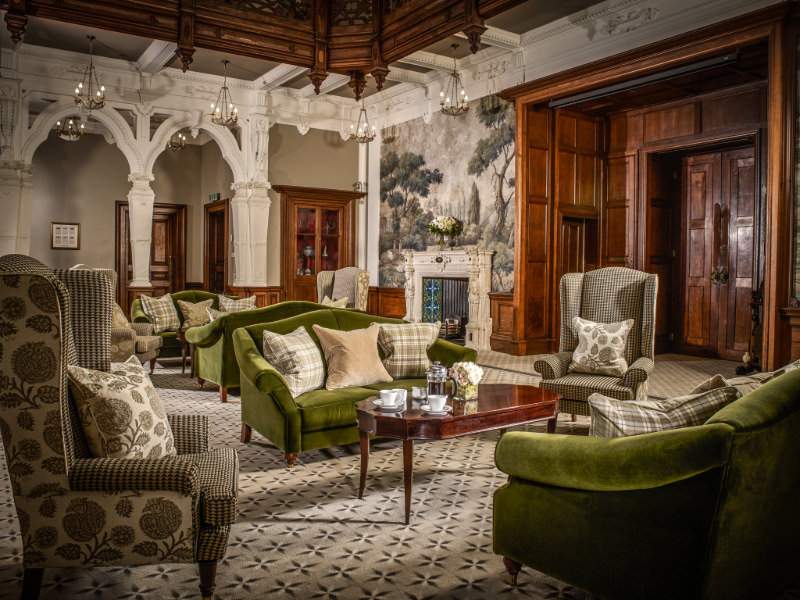
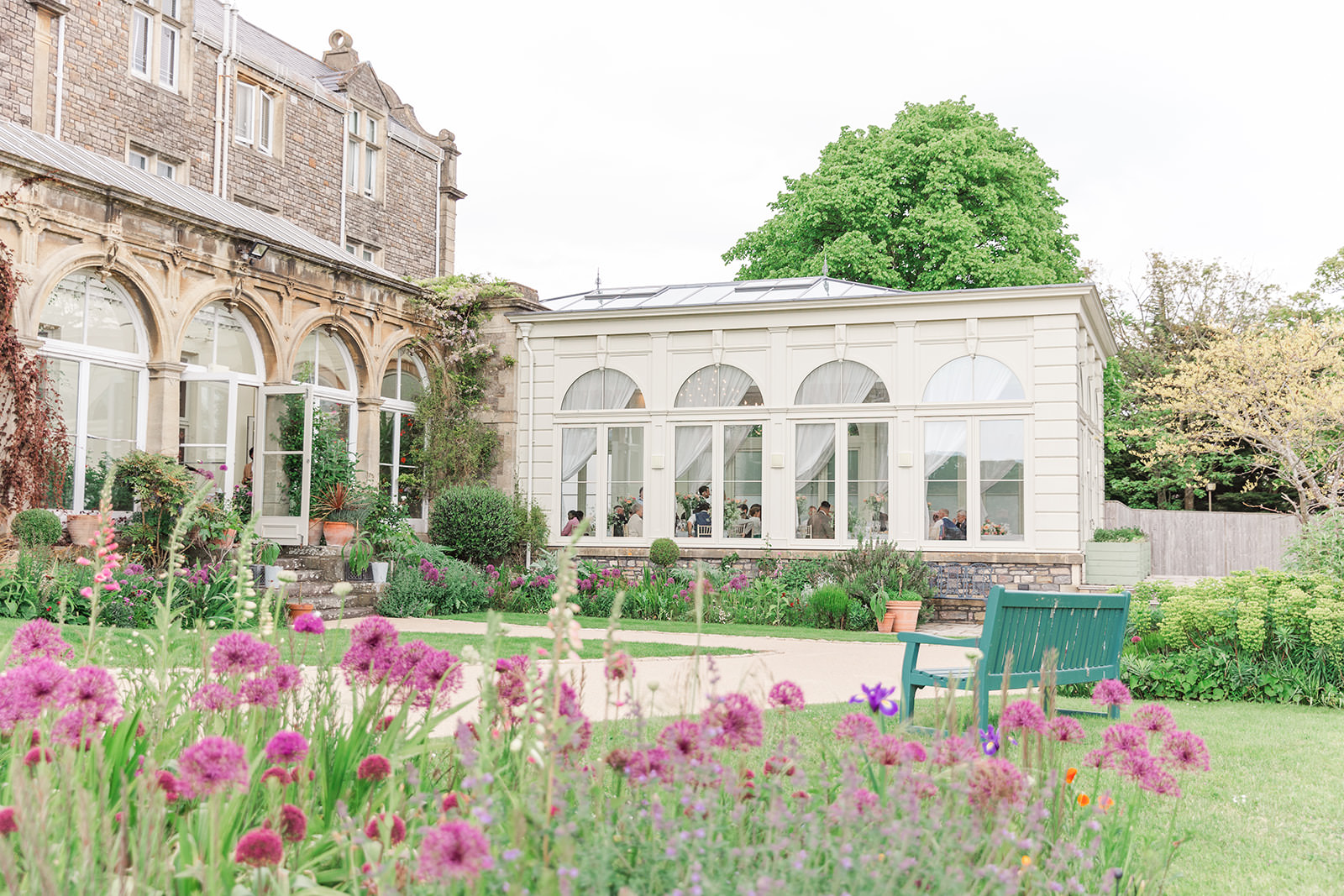
Clevedon Hall is a Grade II* listed Victorian house of 1853 set in 12 acres on the edge of Clevedon in North Somerset, overlooking the water. It is directly off junction 20 of the M5, 15 miles from Bristol, and 20 minutes from Bristol Airport, which puts it at the well-connected end of the county rather than the remote end.
Weddings take the whole house and estate exclusively, seating up to 150 in the main house and up to 250 for an evening party, with all catering cooked on site.
Lauren England and the wedding team take viewings most weekdays. If you are comparing Somerset venues, come with the nine points above and ask us all of them.
Sources
- Glastonbury Festival 2027 dates and 2026 fallow year, ITV News West Country: https://www.itv.com/news/westcountry/2025-09-25/glastonbury-festival-confirms-dates-for-2027-event-after-fallow-year
- North Somerset Council, registrar and register office fees: https://n-somerset.gov.uk/my-services/births-marriages-deaths/registrar-fees-charges/registrar-register-office-fees
- GOV.UK, marriages and civil partnerships, giving notice: https://www.gov.uk/marriages-civil-partnerships/give-notice
- General Register Office, guidance on approved premises: https://assets.publishing.service.gov.uk/government/uploads/system/uploads/attachment_data/file/440072/ApprovedPremisesGuideIssue5.pdf
More Wedding Inspiration


.svg)


